

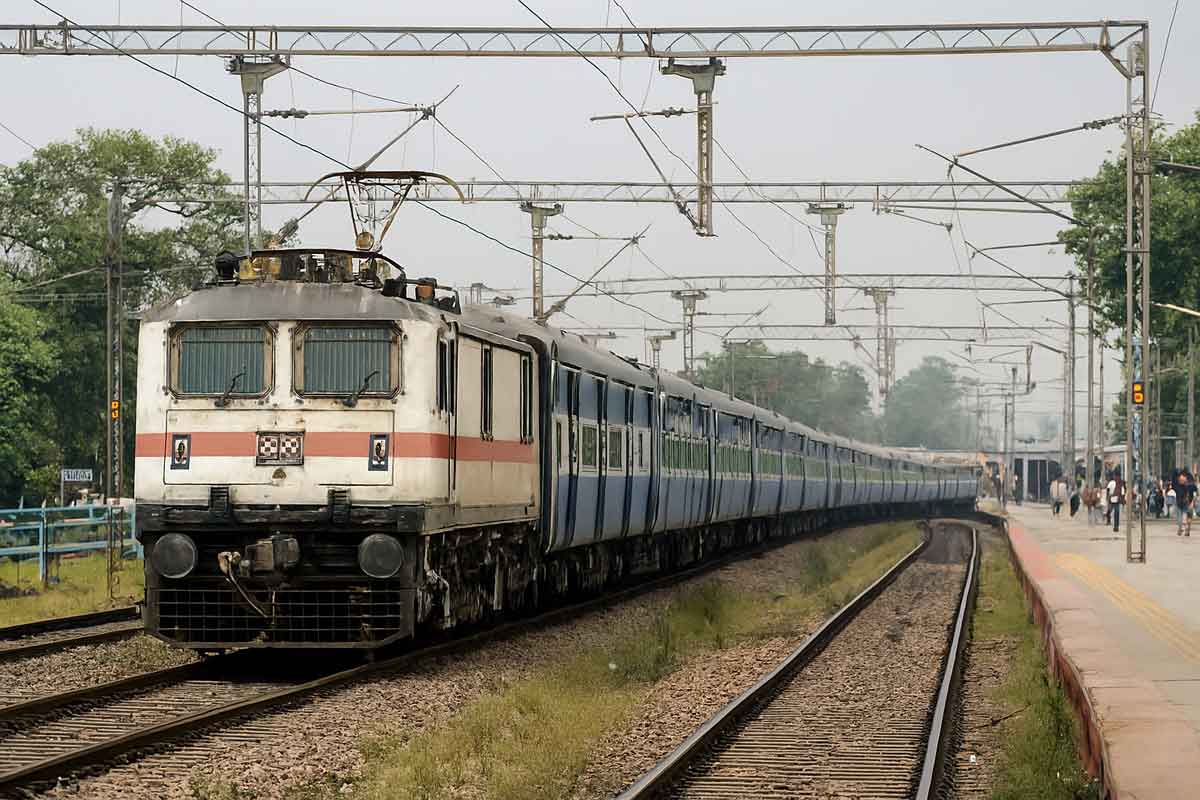
The sentiment surrounding railway stocks appears to be turning, with Indian Railway Finance Corporation (IRFC) shares seeing a significant rebound. On Tuesday, December 23, the stock surged by over 5%, trading at approximately ₹122.88, even as the broader benchmark indices like the Sensex showed marginal weakness. This marks the third consecutive session of gains for IRFC, part of a wider recovery across the railway-linked public sector undertakings (PSUs) that have been battered for much of the year.
This swift surge is notable because it follows a period of intense pain for IRFC, which has been cited as one of the biggest wealth eroders in the rail sector in 2025 due to a steep valuation correction. The immediate trigger for the current buying interest seems to be a combination of technical factors signaling an end to the downward trend, anticipation surrounding the upcoming Union Budget, and a crucial announcement regarding fare rationalisation by the Indian Railways. Investors are clearly re-evaluating the outlook for the entire infrastructure financing space.

The Catalyst: Fare Hike and Budget Anticipation
The spark for the renewed investor interest came from a recent decision by the Indian Railways to revise passenger fares. While modest—a rise of 1-2 paise per kilometre, mostly on long-distance routes—the move has been interpreted by the market as a strong signal of policy intent toward improving the Railways’ financial health. Though IRFC is a financing arm and not directly involved in ticketing revenue, a healthier balance sheet for the Indian Railways means a more stable core borrower for IRFC’s long-term business.
Furthermore, the familiar pre-Budget buzz is now in full swing. Historically, railway stocks draw attention in the lead-up to the Union Budget presentation in February, with the market often pricing in higher capital expenditure (capex) allocations. Expectations are building for a potential 10-12% increase in the railway capex outlay for the next financial year, a boost that directly translates into higher financing requirements for IRFC.
IRFC’s Valuation and Long-Term Fundamentals
The recent price movement needs to be viewed against the backdrop of the stock’s valuation profile. The 2025 correction, which saw the share price fall sharply from its 52-week high of ₹158.00, was widely attributed to an “irrational exuberance” that pushed the Price-to-Earnings (P/E) ratio to unsustainable levels relative to its growth. Following the correction, the stock is now trading at a P/E ratio around 23.55 times its trailing 12-month earnings.
While this P/E is still considered high compared to some industry peers, IRFC’s fundamentals remain robust due to its unique position. As the dedicated financing arm of the Ministry of Railways, nearly 80% of its business is guaranteed. Its core business model, based on a cost-plus leasing arrangement with the Railways, ensures remarkably high earnings visibility and a zero non-performing asset (NPA) record. The company’s profit after tax (PAT) for the September 2025 quarter was reported at a healthy ₹1,777 crore.
Key Concerns Investors Must Track
Despite the recent uptick, two major factors continue to act as an overhang on the stock, urging caution among investors:
- Minimum Public Shareholding (MPS): The Government of India holds a significant stake in IRFC (around 86.36% as of September 2025). To comply with SEBI’s MPS norms, the government will eventually need to divest a substantial portion of this holding. Any announcement of an Offer for Sale (OFS) could increase supply in the market and potentially depress the share price temporarily.
- Medium-Term Growth Triggers: Analysts suggest that while the pre-Budget rally provides momentum, a sustained upside will require concrete evidence of faster project commissioning and an improved earnings outlook from the entire railway ecosystem, moving beyond just policy talk.
The recent rebound, supported by strong trading volumes—well above the 20-day average—signals fresh investor interest. For existing holders, the bounce offers a reprieve. For new investors, the focus shifts to whether the upcoming Budget delivers the large capex figures the market is currently anticipating.
FAQs
- What was the IRFC stock’s high and low for the last 52 weeks?
The 52-week high for IRFC was recorded at ₹158.00, while the 52-week low stood at ₹108.04. - What is the key factor driving the entire railway sector rally right now?
The rally is primarily driven by two factors: the anticipation of a high capital expenditure allocation for the railways in the upcoming Union Budget and the recent fare rationalisation announced by the Indian Railways, which signals improved overall financial health for the sector. - Is the high government holding in IRFC a risk factor?
The high promoter holding (around 86.36%) necessitates a future stake sale by the government to meet the Minimum Public Shareholding norm. This potential increase in supply is considered a medium-term risk factor that could impact the stock price.
Disclaimer: This article is for informational purposes only and should not be construed as investment advice. Stock prices are volatile, and readers are advised to consult a certified financial advisor before making any investment decisions.
