

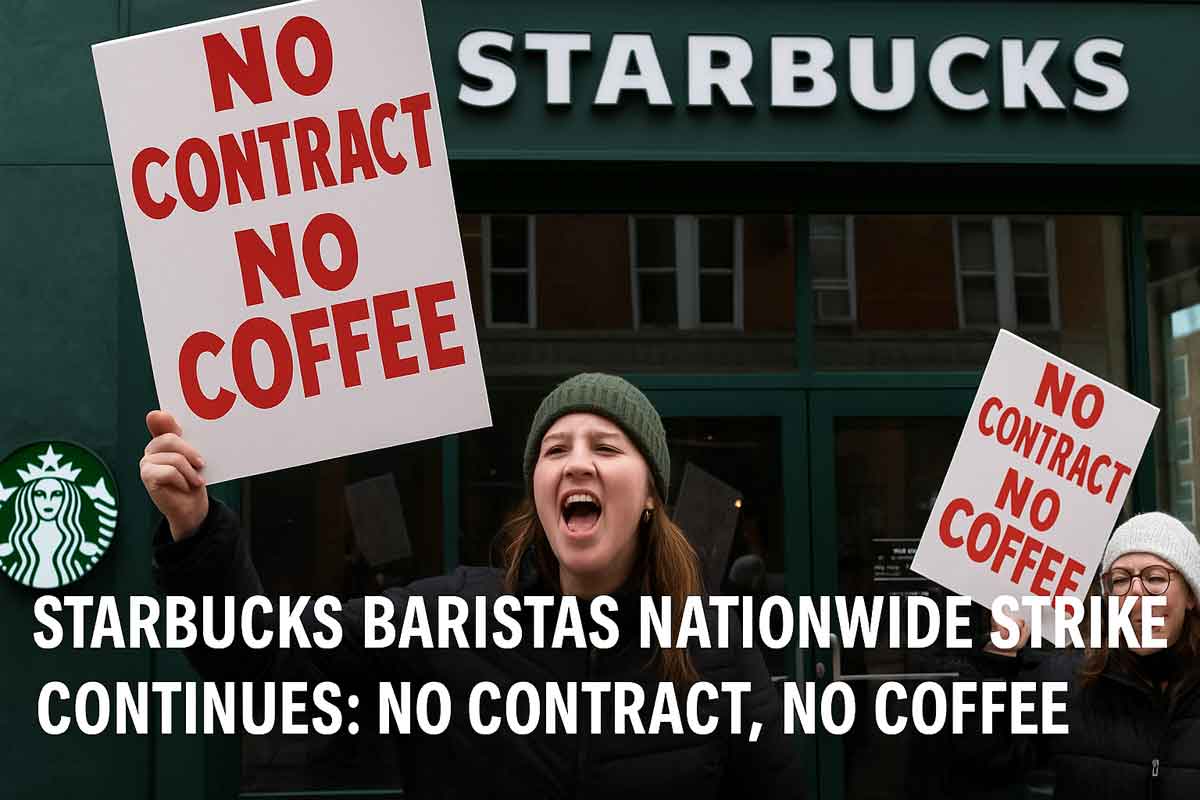
Starbucks baristas across the United States have launched a growing nationwide strike, led by unionized workers seeking a fair and stable contract. Their message, “No Contract, No Coffee,” reflects a push for predictable schedules, improved staffing, safer workplaces and wages that match the cost of living.
Many baristas say the issue goes beyond pay. Long shifts, unpredictable scheduling and high-pressure service environments have contributed to fatigue, chronic stress and emotional strain. The strike serves as a call for healthier working conditions across the company’s busy stores.
Latest News: Nationwide Strike Continues
Union organizers report that baristas from numerous unionized Starbucks locations have joined the ongoing unfair labor practice strike. Rallies, picket lines and coordinated events—often tied to major promotional periods—are being held to increase visibility.
Starbucks has stated that most stores remain open and that the company has participated in bargaining discussions. Workers argue that progress has stalled, creating a widening disconnect between the two sides and extending the duration of the nationwide strike.
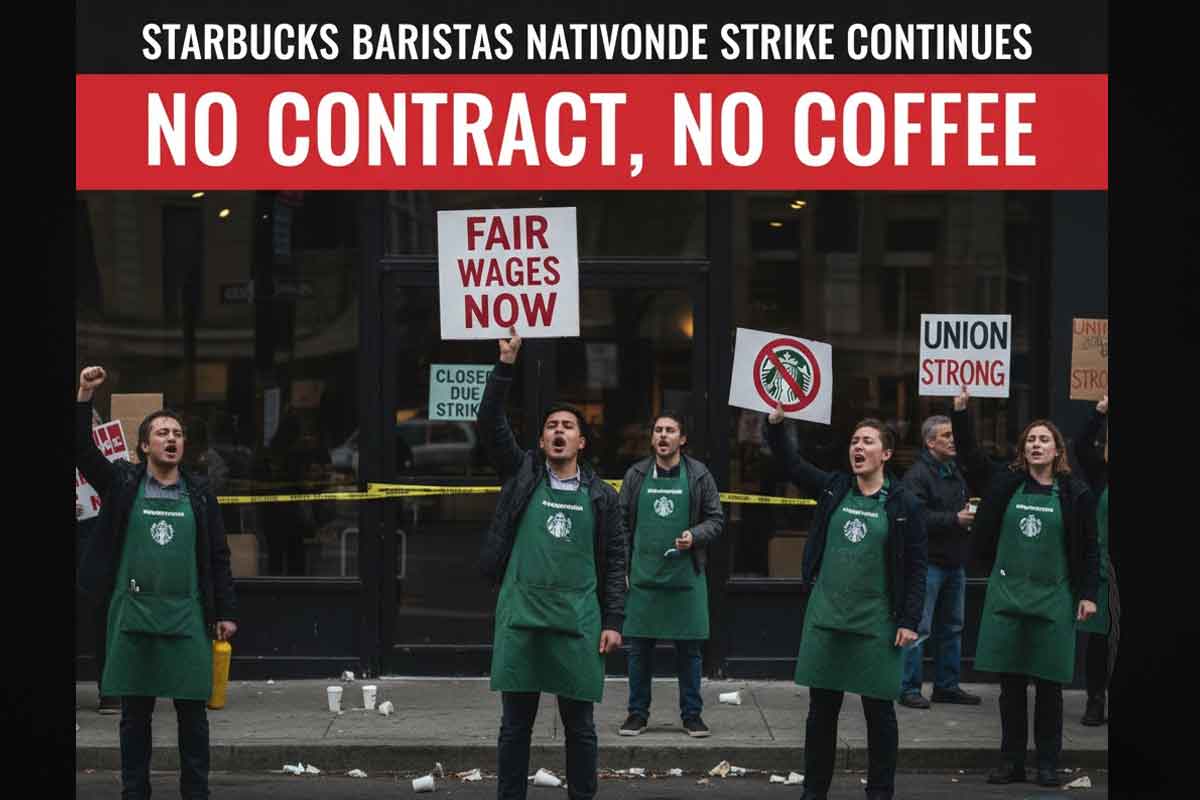
Is This Truly a Nationwide Strike?
The strike does not include every Starbucks store; instead, it involves unionized locations affiliated with Starbucks Workers United. These stores are spread across multiple states, giving the movement national reach even though the level of participation varies by region.
- Walkouts have been reported in states including Washington, New York, Pennsylvania, Iowa and Virginia.
- Some stores held one-day pickets, while others are part of a longer strike.
- Community events and solidarity demonstrations support the “No Contract, No Coffee” campaign.
From a worker well-being standpoint, the nationwide participation highlights shared experiences of burnout and emotional strain across very different communities.
“No Contract, No Coffee”: What the Slogan Represents
“No Contract, No Coffee” is both a rallying cry and a public call for accountability. Workers urge customers to understand the labor behind each cup and to reconsider crossing picket lines during the strike. For baristas, the slogan reflects the need for healthier work routines and more predictable schedules.
- Long hours on foot contribute to fatigue and joint pain.
- Customer-facing pressure without breaks increases mental strain.
- Irregular schedules can disrupt sleep, diet and overall health.
The message underscores a connection between fair working conditions and the well-being of those who serve millions of customers daily.
Key Details of the Starbucks Baristas’ Action
- Main concerns: wages, scheduling predictability, staffing levels, workplace safety and alleged anti-union practices.
- Strike type: open-ended unfair labor practice strike, alongside shorter solidarity strikes in some areas.
- Union involvement: coordinated by Starbucks Workers United, which organizes pickets and outreach.
- Company statement: Starbucks notes continued bargaining efforts but disputes some union claims.
- Worker health focus: fair staffing and stable shifts are linked to better physical and mental well-being.
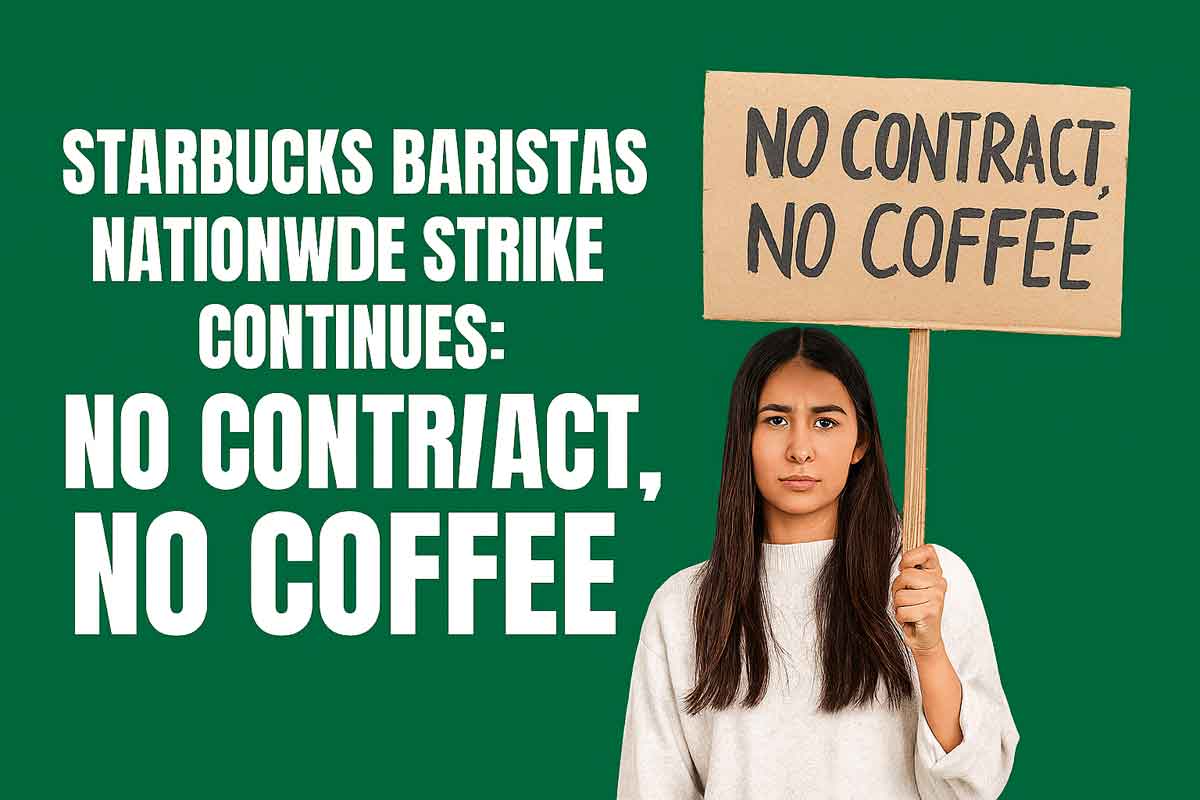
Why This Matters for Worker Health
Front-line service work often involves intense multitasking, high noise levels, fast movement and constant customer demands. When combined with inconsistent hours or short staffing, stress levels rise and recovery time decreases.
The ongoing Starbucks strike highlights these concerns and raises broader questions about how workplace structure affects long-term employee health, satisfaction and performance.
Disclaimer
Information in this article reflects publicly available updates at the time of writing. Strike details, negotiations and store participation may change rapidly. Readers should refer to verified news sources or official statements from Starbucks or union representatives for the latest developments. This article is intended for informational purposes only.
FAQs
Q1. Why are Starbucks baristas participating in the nationwide strike?
Baristas report that they are striking to secure a fair contract addressing pay, scheduling, staffing and workplace safety. Many say inconsistent shifts and high workloads have affected their physical and mental well-being.
Q2. What does “No Contract, No Coffee” mean for customers?
The slogan encourages customers to support workers by respecting picket lines and recognizing that labor conditions affect the people preparing their drinks each day.
Q3. Are all Starbucks stores closed during the strike?
No. The strike involves unionized stores, and many other Starbucks locations remain open. However, the participation of shops across many states makes the movement national in scope.
