

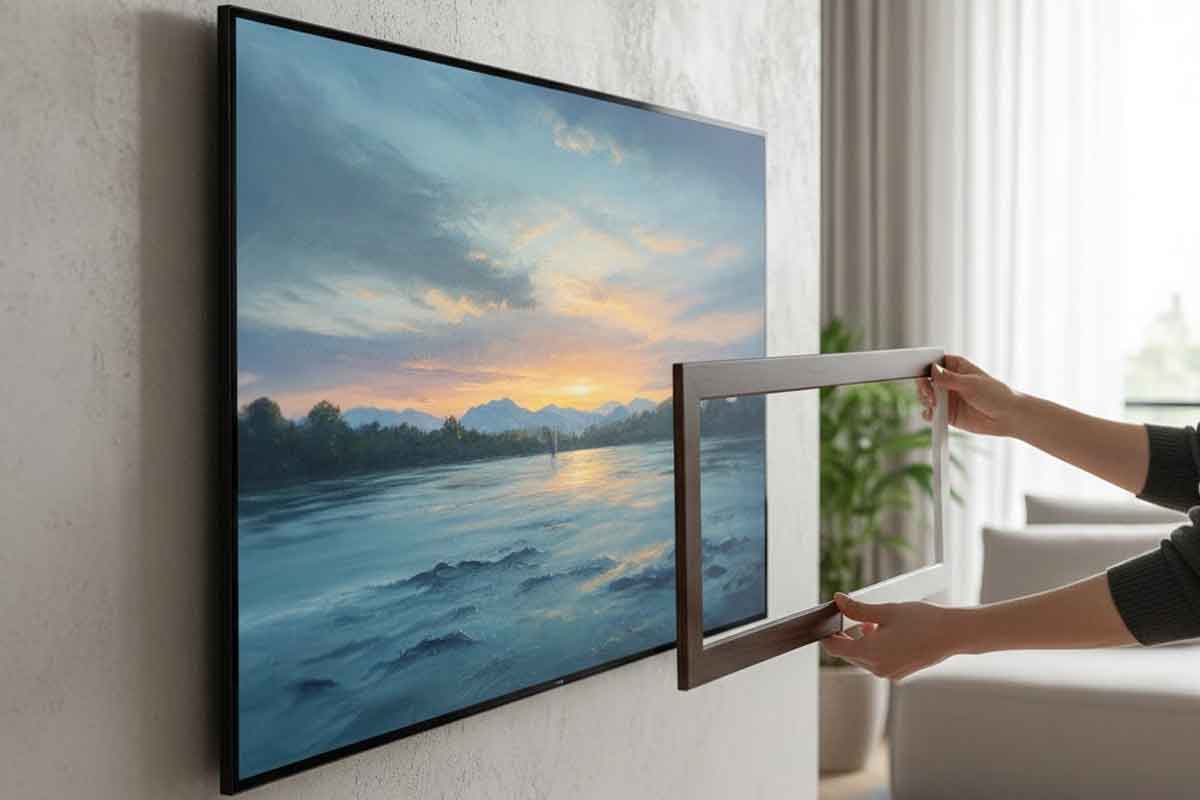
LG Gallery TV: New Features and the Battle Against Samsung’s The Frame
LG is making a serious move into the “lifestyle TV” space ahead of CES 2026 with the introduction of the new LG Gallery TV. This model is designed to directly compete with Samsung’s highly successful ‘The Frame’ series by blending high-end display technology with customizable aesthetic features. It aims to make the television a piece of wall art when not in use.

Core Features of the LG Gallery TV
The entire concept revolves around turning a black rectangle into a decorative element. LG has focused on three key areas to achieve this:
1. Magnetic, Customizable Frames
The most user-centric feature is the interchangeable bezel system. Unlike previous models where frames were fixed or required complex installation, the Gallery TV uses magnetic frames. This allows users to easily swap the bezel materials and colors—for example, switching from a white wood finish to a darker metal look—to match their changing interior decor.
2. Dedicated Art Display Mode (Gallery Mode)
When the TV is turned off, the Gallery Mode activates. It utilizes a special Art UI designed to showcase high-resolution digital art, photography, and possibly even NFTs. The goal here is low power consumption while maintaining a vibrant, realistic picture quality so the art piece doesn’t look like a standard screen saver. LG aims to offer a constantly updated, curated art collection to keep the display fresh.
3. Super-Thin, Wall-Flush Design
A true “Gallery” or “Canvas” TV must sit flush against the wall. The new model achieves this through an ultra-thin profile and likely a redesign of the wall mount system, similar to its high-end OLED G-series. This minimises the gap between the TV and the wall, giving it the appearance of a framed canvas rather than a mounted electronic device.
Head-to-Head: LG vs. Samsung’s The Frame
This launch is a clear challenge to the long-standing dominance of the Samsung Frame TV. While Samsung is rumored to be preparing a counter-move with the ‘The Frame Pro’ TV, LG is currently betting on ease of customization and potentially its superior OLED display technology (though the source material doesn’t explicitly confirm OLED for the Gallery TV, LG’s focus usually hints at it).
- The Battleground: Both companies recognize that people want their expensive, large-format TVs to disappear when not showing content.
- The Difference: The magnetic frames are a smart competitive move. It removes the hassle barrier, encouraging consumers to actually change the look of the TV regularly. As one buyer might react, “Finally, a frame I don’t need a toolbox to change! I can update my living room style in minutes.”

Value-for-Money Analysis: The Buyer’s POV
For the average consumer, this release forces a critical question: Is the aesthetic premium worth the cost? If the LG Gallery TV is priced competitively against a traditional LG C-series or G-series OLED, the added magnetic frame feature offers significant value for money simply because it allows the TV to serve a dual purpose. Before this, you either had a great picture or a great aesthetic, rarely both seamlessly.
The overall industry trend suggests that lifestyle TVs will make up a larger percentage of high-end sales going forward. The expectation is that this design focus will expand beyond just the top-tier models, eventually bringing interchangeable frames to mid-range devices too. We should look closely at the price and available screen sizes once the official CES launch happens. If the art subscription model mirrors Samsung’s, that will be the extra recurring cost to factor in.
DISCLAIMER: The features and specifications mentioned are based on pre-CES 2026 announcements and early reporting. Final product details, including pricing, precise display technology, and availability, are subject to LG’s official unveiling at CES 2026. Official specifications may vary.
Written by: Anil Sinha – Gadgets – Naukri Sarkari – https://www.naukri-sarkari.com
