


It has been almost two decades that we, as a human community, have been experiencing the web in a normal kind of way. You have a page open, and then you search and click your way through a dozen links. However, as we embark upon the end of 2025, this particular tradition seems to be changing. Many technology lovers have started realizing that when it comes to the inclusion of AI, Google Chrome and Safari sites are lagging behind. This particular AI browsers 2025 are meant to be something way better than finding links for you.
The Big Shift in Browsing
The Big Conventional browsers were designed for reading. The top 5 AI browsers of 2025 are designed for “doing.” These browsers do not simply wait for a click; instead, they comprehend the meaning of what you view before you. Whether the task involves a school project or a complicated evaluation of merchandise, these browsers can integrate all data within seconds of each other. Now, let us explore the first five among the leaders of this movement.
1. Comet by Perplexity
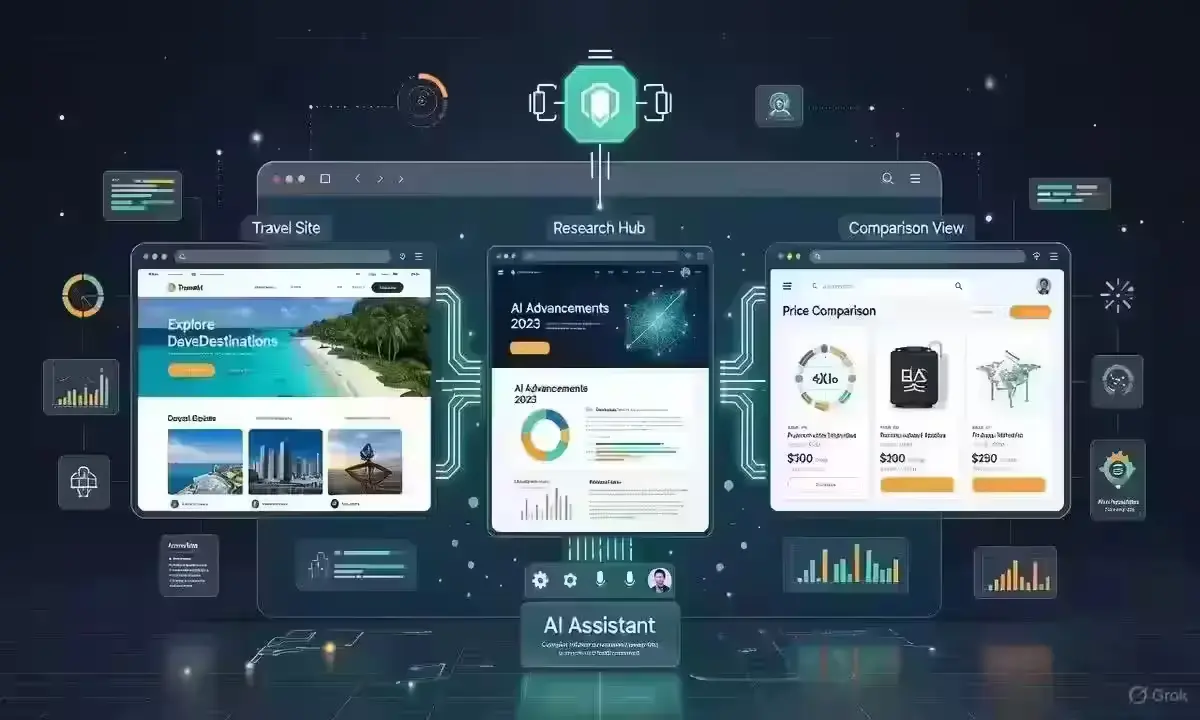
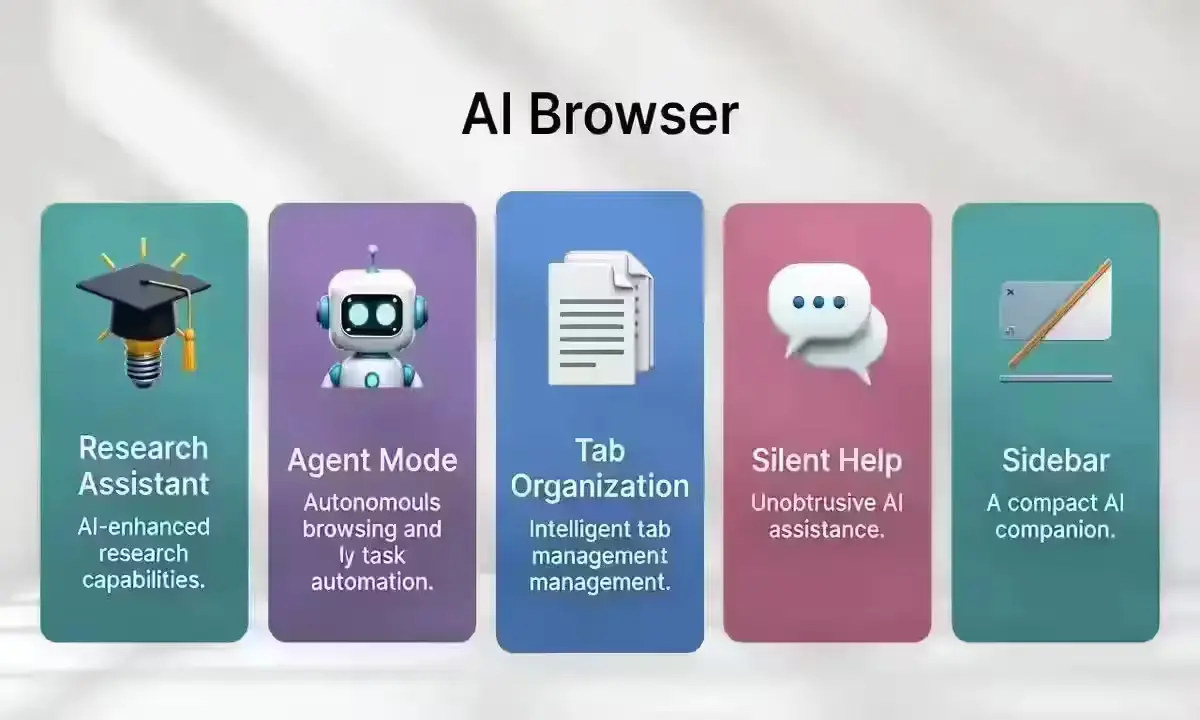
“If you want to see where things are going, look at Comet.” Comet is a product of Perplexity and is perhaps the most aggressive in reinventing the web browser. “What Comet will replace is this: instead of having a search box, you have a ‘query box.’ Instead of searching for a website, you ask a question.” Comet has a “built-in agent that surfs the web and reads several pages before providing a verified answer with citations.” It’s a “research assistant that lives in your dock.”
2. Atlas by OpenAI
Released late in 2025, Atlas brings the full power of ChatGPT right into the browser core. Whereas other browsers require extensions, Atlas is an AI-native browser. Its most interesting feature is “Agent Mode,” in which it can navigate through various websites to accomplish such tasks as reservation of a table in a restaurant or the best deals on a flight on five separate travel websites. It is as if it is someone sitting right next to you to help you accomplish your to-do lists.
3. Dia: The Subtle Helper
Dia is an app developed by the same people behind the Arc web browser. Where Arc may have been all about life organization, Dia is all about ‘invisible AI’. It’s not loud. It simply observes your workflow and provides ‘Skills’, which are essentially scripts that will summarize an article you are reading or write you an answer you can send back in response to an email you’ve received. It’s an awesome tool for those looking for AI assistance but do not want to learn an entirely different way to get around.
4. Arc Max
Arc has become a popular choice in terms of design, and Arc Max has come of age in 2025. Arc Max is all about making the “messy web a clean web.” Arc Max can automatically give new names to your messy downloads, give a summary of a link even before you click it, and even organize your tabs according to what you are trying to work on. Arc Max would be a lifesaver for those who feel burdened with too many open tabs.
5. Aria (Opera)
Opera has existed since the dawn of time, but now their Aria AI has made it a serious competitor once again. Aria is amazing since it is very accessible. You do not necessarily have an expensive subscription with Opera Aria in order for you to benefit from their AI support. It is found on the sidebar and will assist with anything from software writing to composing an email. Without a doubt, it is one of the most useful AI Browsers available in 2025.
Price and Release Details
All these browsers have a free option. For now, both Comet and Aria are free browsers, but to use the more advanced “Agent” options on Atlas, you will need a ChatGPT Plus subscription. All of these have either officially been released or had significant 2025 updates over the summer/autumn of this year. They all support both Windows and macOS, with mobile updates now underway.
Disclaimer: Keep in mind that experience with AI Browsers may differ depending upon the hardware and internet connection speed you have. You should also check the privacy settings if any AI agent has to access your personal accounts or data.
Frequently Asked Questions (FAQ)
1. Why are Google Chrome and Safari falling behind?
While they are stable, they rely heavily on traditional search and extensions. Newer AI Browsers build intelligence into the core, allowing for task automation that Chrome and Safari cannot yet match natively.
2. Is Comet by Perplexity free to use?
Yes, Comet currently offers a free version that includes its powerful research tools and agentic browsing capabilities for all users.
3. Can Atlas really book flights for me?
In its “Agent Mode,” Atlas can navigate travel sites and fill out forms, though it typically asks for user confirmation before the final payment or booking step.
4. Which AI Browser is best for privacy?
Browsers like Dia and Arc Max focus heavily on local data processing, though any AI-integrated tool will require some level of data exchange to provide smart answers.
